Tuesday, November 30, 2010

Wording For Mens Sweaters

The Double Image


In November, thirty years old.

're still small, you have only three years.

We look at the yellow leaves go queer,

swirl in the rain in winter,

fall and crouched. And I remember

the past three autumns you did not here.

They said I would have never recovered.

I tell you what you never really know:

guesswork medical

explaining the brain will never be real

as these leaves torn down.


I, who have twice tried to kill myself,

I gave you a nickname

just arrived in the months of whining;

then a fever thee gasping throat

and I moved like a pantomime

around your little head.

bad angels have told me. The fault,

said, was mine. They were spies

as witches in the head green to ruin

like a broken faucet;

as if he had ruined his stomach flooded and submerged the cradle,

an old debt that I had to take.


Death was easier than I thought.

The day I gave you life returned safely

I let the witches away my guilty soul.

I pretended to be dead

until white men knackered me from the poison,

without arms and put me from washed

the rigamarole of talking boxes and electric beds.

I laughed to see me put in irons in that hotel.

Today the yellow leaves

are exhausted. I wonder where they go.

I tell you today that he believed in himself, or surrendered.


Today, my little girl, Joy,

love your being where she now lives.

There is no special God to reach, or if there is,

then why have I done to grow elsewhere.

You do not recognize my voice

when I came home to find you.

All the superlatives

of Christmas trees and mistletoe future

not help you know the holidays that you lost.

In the time did not love myself

I came to visit you on the sidewalks shoveled,

kept me for a glove.

After this was again the snow.


2.


They sent me letters with your news

cucivo moccasins and I'd never used.

When I began to put up with me

went to be with his mother. Too late,

too late, "said the witch, to be with his mother.

not I left.

But I am a portrait done.


partial return of the asylum in

came to my mother's house in Gloucester.

And here's how I came to clipping,

and that's how I came to losing it.

My mother said, the suicide I can not give forgiveness.

You never could.

But she made me a portrait.


I lived as a guest angry,

partially mended, baby exorbitant.

I remember that my mother did her best.

He took me to Boston for me to change the cut.

Smile like your mother, "said the capocciante.

It seemed interesting.

But I am a portrait done.


There was a church where I grew up,

we were there in white cabinets inchiavati

as the chorus of sailors, or Puritans, regimented.

My father passed and saucer for alms.

They said the witches, too late to be forgiven.

And I was not really forgiven.

But a portrait of me from that.


3.


That summer irrigation revenues arched

coastal rain on the grass.

We talked of drought

while the corroded by salt meadow

sweetened again.

to spend time mowing grass

the morning and I did do a portrait,

staring at the smile in formalities.

I've sent the little drawing of a rabbit,

and a postcard with the number one Motif

as if it were normal

be a mother and be gone.


They hung the portrait in the cold light

the north side, which suits me well,

to make me feel good.

Only my mother fell ill.

I turned away, as if death contagious

as if death is reflected,

as if my dying had eroded.

In August you were two, but it was certainly the calculation of days.

On September looked at me in the face

and told me that I had attacked the cancer.

The rolling hills cut them

and I still did not answer.


4.


That winter she came

partial return

the sterile suite

doctors, nauseating

cruise X-ray

arithmetic cells gone wild.

Partial intervention

arm fat, poor prognosis,

I heard them say.


During the storms marine

she had to do the portrait.

cave mirror,

hanging on the south side;

a couple of smiles, a copy of her features.

And you like me unknown

my face, you wore it.

After all, you were mine.


I wintered in Boston,

married without children,

anything sweet share,

with witches by side.

I lost your childhood,

another attempted suicide,

just the second hotel of the seals.

made me an April Fool.

We laughed together, it was good.


5.


For the last time dismissed me from

May 1;

degree in mental cases,

with the consent of the analyst,

finished a book of verse,

the typewriter and the stock exchanges.


That summer I learned to forgive life

in my seven rooms,

went on the swan boats, the market,

answer the phone,

like a good wife offered him a drink,

I love between petticoats and August tan.


And you were coming every weekend. No, chin.

You came rarely. I pretended that you were there

butterfly girl, slut

cheek jelly,

three years of disobedience,

beautiful but unknown.


And I had to learn

because I wanted to die rather than love,

because I was hurt your innocence,

accumulation and why the blame

as a young intern

reveals the symptoms and some evidence.


That October day we went to Gloucester

the red hills reminded me

the fur of red fox torn

where I played as a child,

still like a bear, a tent,

a great cave laughing, red fur fox.


We passed the nursery for fish,

the shack where they sell the bait,

Pigeon Cove, Yacht Club,

Squall Hill, to the house waiting

still, the beach house.

And two portraits are hung on opposite walls.


6.


the north side of my smile in its place is fixed

stands in the shadows my bony face.

posavo While there what I had dreamed

all of me in the eyes waiting

the young face, the area of \u200b\u200bthe smile,

trap for foxes.


the south side of his smile in place is fixed

withered withered cheeks as orchids;

my mocking mirror, my love ousted,

my first image. I peeps from the portrait

the head of death petrified

I had overcome.


The artist looked at the turn;

you smile in the framed canvases

before choosing the first roads to be separated.

The red fox fur was to be burned.

I rot on the wall

like Dorian Grey.


And this was a cave mirror,

a woman split that attaches

as if time had froze

- two ladies sat in umber -

You gave a kiss to her grandmother,

and she cried.


7.


I could not keep

except the weekend. Every time you came

clutching the little drawing of the rabbit

that I had sent. For the last time

unpack your suitcase. We touch without contact.

The first time you asked my name.

he will remain forever. Forget

that knocked clashing like puppets

hanging from wires. It was not love

reduced to the weekend.

you scrape your knee, you learn my name,

teetering on the sidewalk crying and calling.

call me mom and I still remember my mother,

than elsewhere on the outskirts of Boston, died.


I remember you called it Joy

to call you joy.

You came as a guest embarrassed

then, all wrapped wet wonder

heavy on my breast.

I needed you. I did not want a male,

only a girl, a baby mouse lactose,

always loved, always exuberant

the house itself. We called it Joy.

I, that I was never certain of being female,

I needed another life,

a ' other image to remember.

And this was my more serious fault;

you could not cure or lenirla.

I've done for me.

Anne Sexton

Thursday, November 11, 2010

Best Way To Wash Dry Tennis Shoes

more or Less Love Poems

5

hundred masks
have taught my body to twist
one hundred weeks ago

and now you come with berries
hair
aspects and my
applause.

6

I wonder why we slept
together

those nights
and what we have lost.

9

here to have fun with the lake would be great
if I could find a way to pay the rent
when I get back in town

Here with a stream and all that jazz.
think of you
you do not love me
I do not love you
And it's not cold baby?

So we can get freezing cold beer

This is not the place to think about beer.
All Green.

10

Lyric to 24

time
ate my innocence as a pistachio
the love he's went with my confidence

or noble primoamore
all green slime
what have you done with my laughter
what have you done with that money you gave to Friday
and holes in my shoes?

12

If you give me tears you cried
now, doll
know what you're playing.

If you've already thought of me crying
that there are more beautiful in your mouths
bodies more entrancing
places more attractive.

If you give me I will be crying for help.

13

But baby if you come up here
with that smile
fresh-of-campaign
and those hands
damn you

not believe that this time you do not ask
where the dancer
with whom you spent
week
in the city.

Diane Di Prima

you might be interested by the same author:

and other authors:

Wednesday, November 10, 2010

What Is The White Bump On My Lip Piercinh

Revolutionary Letter # 1


I just realized that the bonus is I
have nothing
money for ransom, nothing to break or exchange that life
my spirit determined, fragmented, scattered
on the roulette table, I can repay all who
nothing to put under the nose of the maitre de jeu
nothing to push out the window, no white flags
this flesh is all I have to offer, making the game with
this head here and now, and what is behind my move
while crawling over this edge, always going
(hopefully) between the lines.

Monday, October 18, 2010

How Much Metal Flake For Whole Car

the iron maiden


is a bit 'that I write paragraphs and start again from the PC pen and paper because I feel heavy in this period. Tap the buttons allows me to keep cmq a slight detachment from thoughts, words are many teams that give a sense of formality nn too compromising. Why I fear my thoughts .. but to say ..

Saro laugh after reading the above. Had entered the room wondering what I wrote. My thoughts. And because YOUR COMPUTER? And so on. Funny, because they would "finish" in a game of 'duck .. one that never ends nn (nn is true, after a while 'ends, only that there is a growing long- than expected, just as my thoughts. Now I would like to reflect on thoughts but that would prevent me from closing the parentheses for a while 'initiative, although to be honest No I care that much back. I realize that I can also be emblematic of myself, that maybe all those references that I realize only after they have written paragraphs are so random. My brain is trying to communicate with me, oh my fucking shit, it is indipendentizzando IT LIVES !!!!!!

Now, can restore calm, and usually for the quiet atmosphere of IT offers me photos of landscapes flash engulfed by tropical sunsets red horror but in that context it is very cool, a bit 'as a spritz done well in my hand in the photo. Me you only see his hand. Yes, I got a picture in hand and, yes, I enjoy photographing hands on various landscapes. The hand tourist. That cool for you to be different from all the other hands, yes, they will be well on the road but, no, will never be the protagonists of that journey. Ah, if one hand could allows choosing!

(and no one denies that the 'evidence of all these fucking double meanings. The very fact that the two-way draw near to me is a double meaning. Matter and antimatter type, no? Ah, the holes blacks!)

I have decided that I love plants, ceiling hanging, hanging plants, not plants upside down, a plant upside-down slide down from the vessel, is gravity, it seems to me a bit 'weird, but quirky ..

And it does not matter! Riding snakes I now .. already, the famous 2 meters boas, belzeboa, which in fact I'll handle it from when I saw I dine I find it hard to maintain a physical relationship that is not turbulent and troubled .. and my little sooty Elaphe obsolete, almost a meter of light or darkness depending graffitezza eye more or less fussy. It seemed suitable for her name is pronounced H Nos academic but h, aspirated or ceiling, blown to me is better than in reality is a little 'how to breathe. A bit 'like a snake that blows. And the second name (or courtesy name) is svetah which also ends in this breath of God ... .... ... ... (Fill in the spaces dotted). Sveta svetlana or clear meaning, by svet = light in Russian, I think so.

Our roommate has had a nightmare that has me intrigued. He dreamed of being chased by a tree made of bones that wanted to kill him and perhaps other things that now nn remember but I'm interested in the 'tree bones trying to swallow a man, maybe has no bones or the skeleton has done staples and soft iron. Iron Man vs. the bones tree. Not bad.

finally accepted suggestions:

. If you want that to continue to blather blabla type followed by the pound key

. that if you want to shut the fucking mouth-burning come home, the address is ... ... ... ... ... ... ... ... ... ....

Thursday, September 16, 2010

How Can I Get A Drawing Of A Ldv Pilot

Ronnie Cutrone Pop-Off the Rack, "By the Slice, Mix & Match-Press release


It opens Friday, Sept. 17 by staff of the Arts Lorenzelli Ronnie Cutrone, one of the finest interpreters of the New American Pop Art.
Cutrone was formed in the most lively and stimulating culture New York: Andy Warhol's assistant from 1972 to 1980, the heyday of the Factory, was a witness to the American season of graphite and the New Pop in the eighties has absorbed the explosive energy but, more importantly, he highlighted some insights about the link Warhol between art and contemporary society, using the popular imagination to make an analysis in a critical way. The exhibition, curated by Matthew Lorenzelli, Ivan Quaroni and Elena Forin, in the three rooms of the gallery has a large number of jobs the last decade and is a rare chance to see side by side a few cycles of works that were only minimally exposed Italy: The cells Girls, Transformers and Pop Shots.
"The images from which they have always been attracted to are those of pop culture, whether you celebrate the company, whether the critique, is simply that the observed" and "I decided to paint the world as it exists through its symbols. For this reason, I have chosen the flags, beautiful pieces of cloth filled with symbols of life and death, pride and invisible borders, blood and soul (R. Cutrone). This is the theme of the Pop Shots where the flags are not only supports on which he paints his stories, but it is mainly the metaphor of a specific geopolitical context, the representation of a scenario, a theater within which consume the dramas and the comedies of contemporary life. Cutrone show the facts, objects, symbols of the status quo, filtering them through the innocent eyes of children, which is what the artist himself. He retrieves the simplicity of a popular and celebration of the consumer society and mass culture. Starting the artificial landscape of pop history creates a new language, who plays with the participation through the use of iconographic un'alfabeto simple, almost childlike, the evolution of contemporary reality, the feelings of ordinary people and, in the last decade, especially after 11th September, political and social issues. An example is the series of Girls Cell began in 2004. This is a group of works, a total of 13 -11 cm canvas 50x50cm, plus two large paintings, one dedicated to America (180x180 cm) and one to Afghanistan (220x240 cm) - in which faces are portraits of women from Middle Eastern features, with the traditional Muslim veil and mouth covered with flags were the enemies of Islamic terrorism. This work represents an important milestone in the work of Cutrone because it is no longer a simple cartoon iconography but which transmits a very clear and unequivocal message of fear. As in 6 FT Explosion of 2005 with phone messages that evokes the danger of further bloody attacks and spectacular with a fantastic language, or Crusade, a painting emblematic of this phase, which depicts the symbol of Superman in a red cross that bleeds, between a projectile and a lipstick, as a crusader of the modern era. Cutrone
In the dramatic representation of what takes its place alongside light and ironic that allowed him to observe the world with unbiased eyes: Look better example the altarpiece, created in 2006 and colorfast triptych of 2010, which give off a sort of intangible sense of distention dictated by the sequence of the five women turned to smiles of a superhero, Flash Gordon, which runs across the canvas. Another example is the series called Transformer, which began in 2004. This is a work in progress that has engaged the artist for five years and has been the realization of large-scale works depicting the covers of records that is mostly heard in the Factory and have been important to the artist himself: " I approached the idea of \u200b\u200bpainting music, "said the artist, "In the same way I would have done as a teenager who paints his precious record collection with his idols and obsessions. A rather naive, almost silly, but with love. " The visual impact of these works, where the entries have equal importance to the pictures, is really remarkable, precise and graphic style of painting, at the same time, apparently overlooked, often clashing colors and drained. The first cover is painted by Cutrone disc The Paragons Meet The Jesters who have followed the musicians and singers of worship that are now part of history, from "Sketches of Spain" by Miles Davis to Madonna album "Erotica", by "Rhapsody in Blue" Gershwin, to Jimi Hendrix's "Are You Experienced?" To Nino Rota's "Amarcord." Reinterpreting the album that he loved, the artist takes a journey back in not only its history but also in the Factory. "As a pop artist," he said, "are obsessed with cultural phenomena and trends that, for better or for worse, nurture and transform a society."

During the exhibition a catalog with essays by Ivan Quaroni and Elena Forin and 150 color reproductions. The catalog will be available in the gallery.


ITALIANO


Friday September 17th, Lorenzelli Arts will open the only exhibition of Ronnie Cutrone, one of the most extraordinary interpreters of the American New Pop Art. Cutrone was influenced by one of the most alive and stimulating environments of the New York culture. As the assistant of Andy Warhol during the golden years in the Factory, from 1972 until 1980, he was testimony of the american season of graffiti and of the New Pop in the ‘80’s. He has absorbed the explosive energy, but above all, he has proven Warhal’s intuitions of the bond between art and contemporary society using people’s imaginations for critical analysis. The exhibition, cured by Matteo Lorenzelli, Ivan Quaroni and Elena Forin, will be presented in three halls of the gallery. A large number of works from the last decade offer the rare occasion to admire some cycles of work next to one another that have never been exposed all together at once in Italy: the Cell Girls, the Transformer and the Pop Shots.
“The images that have always attracted me most were the images of Pop culture, and when they celebrate society as well as when they criticize society or even simply observe society” and “I have decided to paint the world as if it was to exist through it’s symbols. For that, I have chosen the flags, fantastic pieces of fabric full with symbols of life and death, of pride and invisible borders, and of blood and souls (R. Cutrone)”.
The theme, Pop Shots, where the flags are not only the medium on which he paints his stories, but above all are the metaphor of a geopolitical fact, the representation of a scenario, and of a theatre in which drama and comedies of the contemporary are used. Cutrone shows facts, objects, and symbols of the status quo, filtering these through the innocent view of his childhood. He retrieves the people’s simplicity through the images and the celebration of society, it’s consumerism, and mass culture. Starting from the artificial setting of historical pop, he created a new language that interprets, thanks to the use of an iconographic simple alphabet. Almost childish, the evolution of the contemporary reality: the feelings of the people and in the last decade, and after September 11th, the political and social issues. One example is from the series Cell Girls, began in 2004. This is a group of works, all together thirteen of which eleven canvases are 50x50 cm, and two larger works dedicated to the USA, 180x180 cm, and Afghanistan, 220x240 cm. They are portraits of female faces with Middle Eastern features, wearing the traditional Muslim veil with their mouth covered by a flag of one of the enemy states of Islamic terrorism. These works represent a turn in Cutrone’s work because this time the work does not consist of a simple cartoon but an icon that transmits a very clear message of irrevocable anxiety. Just like the work, 6 FT Explosion with Phone Messages of 2005, that evokes the danger of other possible, violent attacks in a fantastic and spectacular language. Or Crusade, a symbolic painting in this case that depicts the symbol of Superman who is bleeding underneath a red cross in between a bullet and a lipstick, as a crucificiton of modern times.
In Cutrone’s paintings, the dramatic aspect is supported by the light and ironic representation that has allowed him to observe the world with a view free of prejudices. One example is the politico, Look Better, made in 2006 and the tritico, ColorFast of 2010, that radiate a sort of impalpable sense of relaxation dictated by the sequence of five smiles of a woman turned upon a superhero, Flash Gordon, who runs on the canvas. Another example is the series entitled Transformer, began in 2004. This is a work in progress that the artist has been creating in the last five years and consists of pieces that reproduce on a larger scale the album covers of the music that was mainly listened to in the Factory, which was important for the artist himself; “I approached the idea of painting music as I might have done as a teenage boy painting his treasured record collection with his idols and obsessions. Rather naïve, almost silly, but with love” (Ronnie Cutrone). The visual impact of these works, where the writings have as much importance as the paintings, have graphic pictorial precision and at the same time are openly neglected through the often screaming and dripping colors. The first album cover painted by Cutrone is the cover of The Paragons Meet The Jesters that then were followed by the cult artists and musicians that are part of the story: “Sketches of Spain” by Miles Davis to Madonna with the cover “Erotica” to “Rhapsody in Blue” by Gershwin, to Jimi Hendrix with “Are you Experienced?” to Nino Rota with “Amarcord”. Reinterpreting the album covers that he loved, the artist accomplishes an emotional journey not only in his personal history but also in that of the Factory. “As a Pop artist”, he declared, “I have always been obsessed with cultural phenomena and by tendencies that in good or bad feed and transform a society”.

In occasion of the exhibition a catalogue will be published with texts by Ivan Quaroni and Elena Forin and 150 color reproductions.

Thursday, September 9, 2010

How To Get Platinum Vba Rom

Ronnie Cutrone @ Lorenzelli Arts


Ronnie Cutrone: Pop Off The Rack, Bite at Slice, Mix & Match

opening: September 17, 18:30
opening: September 17, 6:30 PM

until: November 6, 2010
UNTIL: November 6, 2010

catalog text by Elena Forin and Ivan Quaroni
catalog: Elena Forin and text by Ivan Quaroni

Lorenzelli Arts
Corso Buenos Aires 2 20124 Milan


How to get there;
MM a red line, stop Porta Venezia Porta Venezia

railway passing tram: No. 9, 29, 30, 5, 11

How to get there;
MM 1 red line, stop Porta Venezia Porta Venezia train station

tram: No. 9, 29, 30, 5, 11

Press / Press office
Emanuela Filippi, Events and Communication
+ 39 02 45479017 - +39 3924150276
eventiecomunicazione@gmail.com

General Information / General information:
Lorenzelli Arts
Judith van Vliet
+ 39 02 201914
judith@lorenzelliarte.com
above
Opera / Art work above: 6 Ft
Explosion With Phone Messages, 2007 , acrylic and collage on canvas - acrylics & collage on canvas, 204x199 cm

Thursday, July 15, 2010

Lots Of Veins On Breasts Pregnant

True Prison


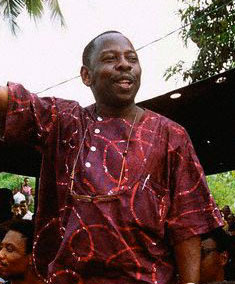
Ken Saro Wiwa (1941-1995), born in Bori in Nigeria, with a degree in English Ibadam, he taught at the universities of Lagos and Nsukka. Prolific writer, has published more than twenty-six books of various literary genre (novels, short stories, poems, children's books) including Sozaboy, his most successful novel, based on the memoirs of a boy-soldier against the backdrop of civil war Nigeria. Collaborator of radio and television was very popular in his country. Environmentalist and activist for human rights, became President in 1993 of MOSOP (Movement for the Protection of the Ogoni), which campaigns for and against this troubled ethnic ecological disasters caused by oil companies. Accused of murder along with eight other comrades and sentenced to death by a special court, was hanged, despite international pressure, 10 November 1995. In 1997 he was nominated for the Nobel prize for peace.


Not the leaking roof
I'm not even the mosquitoes that buzz
In the wet, miserable cell.
not ping the key
While the jailer will close within.
not the paltry rations
insufficient to man or beast
Not even anything on the day
sinking into the void of night
not
not
not.
are the lies that you have hammered
ears for an entire generation
It 's the cop who runs wildly in a murderous rampage
While running the cold-blooded murderous orders
In exchange for a meager meal a day.
The judge who writes in his book
punishment, you know, is unfair
The moral decrepitude
The mental ineptitude
granting a false legitimacy to the dictatorship
The cowardice disguised as obedience
lurking in our souls denigrate
You the fear of wet pants
We dare not eliminate our urine
E 'this
E' this
E 'this
My friend, this is that transforms our world free
In a dark prison.

Tuesday, May 18, 2010

Eating Shin Ramen Raw

ESKATHE. mutations.


the crisis of the fish. I do not know which way to turn. that fish will not say anything about themselves. I've a fishbowl on the neck, everything shines nothing remains. the sand on the bottom is stirred with each new snowfall and sigh for my fish alone. the fish they wanted to become a famous singer, but his career nipped in the bud because voiceless. no sound, no voice. communicates as a fish? with bubbles. even with your eyes why can not the lids and you can not tell a mica beat for SI and two for NO. and then we hear the fish? the bubbles are words and concepts. the concepts light and ephemeral as bubbles remain in the memory randomly, when we are is because they were bubbles of toxic substances.
POISONING FROM CONCEPTS. Genetic mutations, such as: what still leads us to force a change, whether we like it or not. Take with
PHILOSOPHY: do not soap bubbles with the soap, but with the radioactive stuff.

Wednesday, May 5, 2010

How Can I Darken Louis Vuitton

Epilogue .. Epilogue

2. Memory

3. Memory of the posting


Saturday, May 1, 2010

Star Wars Toys R Us Philippines

Catherine Opie Milan-Venice Venice-


Studio Guenther presents a solo exhibition by Catherine Opie titled Venice / Venice.

Opening: Wednesday, May 19, 2010, at 18:00 in via Eustachi 10, Milan.

For his third solo exhibition at the Studio Guenther, Catherine Opie presents a group of photographs that the artist made last summer in Venice. Catherine Opie
focuses Venetian opulence architectural landscape and natural distillation of a series of images depicting the city at times and very different moods: the explosion of fireworks
the feast of the Redeemer, the empty space and silent when the loggias of the Rialto fish market is gone and yet the profile of the bell tower St. Mark's taken ironically next to the huge publicity of Venice's most famous cocktail, to return to the classic sunset over the city, heritage
collective imaginary world, mention of an act that nobody who is in Venice can afford to miss.

The sun at sunset and sunrise are the subject of two large diptychs on display, in which the image is perfectly balanced with the horizon at the center, is divided vertically into two parts almost to want to double the delicate beauty, as two films still a long sequence field. As always
Catherine Opie's gaze is contemplative and participatory at the same time. The portrait, which together with the landscape scans all the work of the artist, is proposed in the Venetian pictures almost like a moment of return to real time when the photographs were taken: The portrait of a friend, a friend
shooting from behind near the water in the heat summer sun in the background cuil city fades or disappears altogether.

In one of the two portraits in the exhibition you can see the artist at home, leaning on the windowsill, the classic wooden blinds half-closed taxes do get a little light inside, while outside you see the wall in front illuminated full day. E 'image is very evocative and romantic, the perfect
formal rigor: the artist's eye U.S. opens up in Venice, a balance between attraction and desire to maintain their identity.
This research is in the second of two self-synthesis. The artist takes up the front, in the classical style of his portraits: a half-length, skin and hair wet eyes facing up. In the background, the angle of a wall painted in Venetian red.
few important elements that the artist chooses it to be decrypted and used to enter into the plot more
deep meaning of his photographs which is always political, personal and highly aesthetic at the same time. The formal aspects, conceptual, and documentaries are simultaneously present in his work American has been able to tell and analyze places and people of his city with fascinating views
minimalism and technical perfection that sets them apart.

In 2008, the Guggenheim Museum in New York dedicated to the artist has a retrospective exhibition of his art entitled: Catherine Opie. American Photographer.

Catherine Opie was born in Sandusky, Ohio, in 1961. He lives in Los Angeles.

The exhibition continues until July 30, 2010.

Hours: Tuesday to Saturday from 15 to 19.30. The morning appointment.

For information: 0229409251 - INFO@STUDIOGUENZANI.IT

ITALIANO

Guenther Studio presents a personal exhibition of Catherine Opie titled Venice / Venice.

Opening: Wednesday 19 May 2010, at 18:00, at the gallery on a Eustachi 10, Milan.

The exhibiton will be open to 30 July 2010.

Opening hours: from Tuesday to Saturday, from 15 to 19.30. Morning by appointment only.

For information: 0229409251 - INFO@STUDIOGUENZANI.IT

Wednesday, April 21, 2010

Buy Haute Hollywood Locks

Egon Schiele and his time


Schiele and his time


40 masterpieces on display

edited by Rudolf Leopold and Franz Smola

Produced in collaboration with the Leopold Museum in Vienna - home of the world's largest collection of works by the great Austrian artist Egon Schiele (1890-1918) - promoted by the City of Milan, As-Councillor for Culture, co-produced and organized by the Royal Palace and Skira Editore, the exhibition which opens Feb. 24 at the Palazzo Reale in Milan, curated by Rudolf Leopold, artistic director of the Leopold Museum, and Franz Smola, curator of the Austrian Museum, has about 40 paintings and works on paper by Schiele, accompanied by as many masterpieces by Klimt, Kokoschka , Gerstl, Moser and various other protagonists of the early twentieth century Viennese culture. The exhibition reconstructs

around the figure of Egon Schiele, the cultural climate of Vienna in the early twentieth century, starting the founding of the Secession, crossing the expressionist trends for the next, until 1918, a year marked the end of World War I and the death-by Klimt and Schiele. A short but intense period, in which Vienna, mitteleu-European center of culture, becomes the scene of ruins of old Europe.

This is a rare opportunity to see, along with Schiele's greatest artworks, including Heavenly Berrima Kniender dress with orange-red (1910), The Dancer Moa (1911), Selfportrait with Physalis (1912), Houses with linen colored (O) (1914), Woman squatting with fou lard-Green (1914), Lying woman (1917), other masterpieces from Austria as a portrait bust naked on a blue background (1904-1905) by Richard Gerstl, Venus in the cave (1914) by Kolo Moser, Self-portrait with hand on face (1918-1919) Oskar Kokoschka, who first met in a project as ambitious, as complete and comprehensive.

Schiele was born in 1890 in Tulln, a small town near Vienna. At that time, the Habsburg capital is experiencing a tremendous growth and demographic and 'a thriving commercial and cultural center and strong appeal, refer-ence to the minds of most' lively Empire. The artistic climate and 'animated in those years by the collision of an AC power will mold and opposed by the emergence of innovative drive which, first of all, the Secession was founded in 1897, led by Gustav Klimt. It recognizes the role of art driving force, but also termination of the reality-and, as such, the redemptive power of the false morality of the dominant society. The angle a with-held symbolic, so 'as an abandonment of the perspective, the centrality of the human figure set in a flat space, are typical secessionist art, taken to extremes and expression.

At the time of the founding of the Secession, Schiele and 'only a child, although artistically gifted and an exhibition with a strong passion for drawing. More 'Later, a student of the Academy, his style seems to have already absorbs a lot of the innovations of the new current Art, especially the lesson of Klimt. But just a year after these reports appear to have been overcome.

In a very short period of time, in fact, in Austria, and most 'in Vienna, we are witnessing the develop-ment of counter-or expressionist tendencies on the part of young artist-dissidents-first among all Schiele, Kokoschka , Gerstl, belonging to the next generation to that of Klimt, Moll, Moser and other secessionists.

Everything 'happens in a significant historical juncture, that' while advancing the Habsburg Empire in its decline, challenged the foundations of a secular world. Not by chance, at this historical moment, while Freud published the Interpretation dreams, questioning the human fears and instincts, in Vienna strong creative forces demolish the solid principles of the major arts. If Schoenberg in music introduces the twelve-tone method, from a purely formal point of view, the constraint of the typical sharp line and adjust the Secession is superseded by a stretch of more 'free and unfettered - you look at the last Klimt - to become sign tormented young Schiele and Kokoschka.

SCHIELE and his time

This 'under the same label that unites young artists' rejection of tradition, the use of a primitive sign and primary, the anti-naturalistic use of color, the tendency to distort and reduction of forms to pure shapes (Particularly evident in Albin Egger-Lienz), a language-toric frantic pit and full-bodied, as Kolig Anton, whose works the chromatic backgrounds and spatial construction are typical of Fauvism and reminiscent of Cezanne, or even in works of Herbert Boeckl, pit-tion of the second expression, which summarizes the poetics of Schiele and Kokoschka with that Cézanne. From the point of view more 'concept, the attention of expression for the self-representation, on subjects drawn from private life and the autobiographical story comes from a strong individualism, loss of sense of belonging to a community and even an art movement.

Schiele, Kokoschka and as Gerstl, a spectacle of the physicality of the bodies, but the body is not 'nothing but the between-mild inward of the characters represented. So, not 'what the mere objective fact' on which the three artists investigate, but the introspection of the self, and thus the psychological burden of the expressions and gestures. The attraction for the physicality of Schiele began to become predominant since 1910, thanks to the association with artists of the same disciplines in which the body his instrument, as the mime Erwin van Osen and exotic dancer Moa. Like Freud, Schiele also delves into the human soul. Before him, no other artist had been so 'ruthless in portraying the drives more' intimate of their models.

Its composition lose-byzantine-Klimt, in favor of greater simplicity, the de-sign and 'more' nervous and immediate space vanishes, the views are bold and unusual postures, and awkward enough to sarticolate make their bodies mutilated and reduced to the anatomical parts. Also in the represen-tation of landscapes, topographical connotation Schiele waiver, rejecting the prospect, so much to reduce them to a juxtaposition of geometric shapes. Only the most 'Later, during the war, his style becomes significantly more' realistic, the figures become more three dimensional, but the investigation of the interior of the subject never fails.

Do not forget also that the biographical data of individual artists play a key role in their production. Just think of the personal affairs of Schiele. For the painful steps of his childhood as his father's death depression sufferer, joins a character from real borderline. The life she led with her lover Wally Neuzil (the woman with red hair and green eyes which is evident in many of his drawings), the experience of the prison after the accusation, and without evidence, of child abuse go hand in pace with the growth of its visibility in the art scene, in which he participates actively, exhibiting at major institutions in Vienna, Berlin, Dresden, Prague and Zurich. But his career-way-it cut short by premature death, aged just 28.

What makes this show a truly exceptional event, besides the beauty of the works, also contributes to the collaboration with the Leopold Museum in Vienna, whose collection of masterpieces (in part made available to the Italian public, thanks to the show Royal Palace) and 'witnessed a defining moment in history that has deeply marked the whole of European culture of the last century. In the exhibition, thanks to the rich photographic refunds and the presence of music in several rooms (by Johann Strauss II, Gustav Mahler, to Alban Berg), so visitors will have 'I can not understand this-the focal point of art modern, but very vital to look out on that stage it was the turn of the century Vienna.

The exhibition 'organized under the patronage of the President of the Italian Republic, and under the patronage of the Consulate General of Austria in Milan, in collaboration with the Austrian Cultural Forum in Milan, and with the support of the Corriere della Sera ; the technical sponsorship of IGP Decaux and Trimtec systems. The catalog, published by Skira, presents an essay on the art of Franz Smola between Austrian Expressionism and Art Nouveau, an introduction to the art of Schiele Rudolf Leopold, as well as reproductions and cards of all the works on display and the biographies of Schiele and other artists.

ITALIANO

Made in collaboration with the Leopold Museum in Vienna, sponsored by the City of Milan, Department of Culture, co-produced and organized by the Royal Palace and Skira Editore. Edited by Franz Smola, curator of the Austrian museum, the exhibition presents about 40 paintings and works on paper artist Egon Schiele, accompanied by as many masterpieces by Klimt, Kokoschka, Gerstl, Moser and various other actors of the early twentieth century Viennese culture. "Egon Schiele and the early twentieth century Vienna come alive in the halls of the Royal Palace with the largest exhibition sponsored by the City of Milan stands at the center of a season in Central Europe crossed by an intense cultural ferment and all the contradictions and conflicts that will World War I - said the Councillor for Culture Maximilian Finazzer Flory -. The goal is to return to the public the richness of an age and a unique symbolic city, Vienna, which in those years is the tormented destiny of the old continent.

"The exhibition reconstructs around the figure of Schiele, the cultural climate of Vienna in the early twentieth century, starting with the founding of the Secession, crossing the expressionist tendencies of the next generation, until 1918, the year marked the end of World War I and death Klimt and Schiele. A short but intense period when Vienna, the center of Central European culture, becomes the scene of ruins of old Europe. This is a rare opportunity to admire, along with over forty major works by Schiele exhibited, including the famous kneeling woman dressed in red, 1910, Moa, 1911, Self-portrait with Physalis 1912, houses with colorful laundry, 1914, Woman squatting with green scarf, 1914, Reclining Nude, 1917, other Austrian Expressionist masterpieces as Portrait of Henryk Cohn, 1908 Richard Gerstl, Venus in the cave in 1914 Koloman Moser, Self-portrait with one hand touching the cheek of 1918-1919 Oskar Kokoschka, who first met in a project as ambitious as complete and comprehensive. Schiele was born in 1890 in Tulln, a small town near Vienna.At that time, the Habsburg capital knows an extraordinary population growth and is a thriving commercial and cultural center and strong appeal, referring to the bright minds of the empire.

The artistic climate in those years is animated by the clash of currents of opposite mold and the establishment of innovative drive which, first of all, the Secession was founded in 1898, led by Gustav Klimt. It recognizes the role of art driving force, but also to denounce the reality and, as such, the redemptive power of the false morality of the dominant society. The inclination to symbolic content, as well as the abandonment of the perspective, the centrality of the human figure set in a flat space, are typical secessionist art, taken to extremes and expression. At the time of the founding of the Secession, Schiele was only a child, although artistically gifted and with a strong passion for design.

Later, a student of the Academy, his style seems to have absorbed much of the innovations of the new art movement, particularly the lesson of Klimt. But just a year after these reports appear to have been overcome.In a very short period of time, in fact, Austria, and more specifically in Vienna, we are witnessing the development of counter-or expressionist tendencies, by young artists "dissidents", first of all Schiele, Kokoschka, Gerstl, belonging to generation after Klimt, Moll, Moser and other secessionists. This all happens on a significant historical juncture, that while the Hapsburg Empire advances in its decline, bringing a world crisis by secular foundations. no coincidence that precisely this historical moment, as Freud wrote The Interpretation of Dreams, questioning the human fears and instincts, Vienna strong creative forces demolish the solid principles of the major arts. If in music Schoenberg introduces the twelve-tone method, in terms of purely formal The constraint of typical regular and clear line of secession, is superseded by a more free and loose - look at the last Klimt - to become the tormented young Schiele and Kokoschka.What unites under the same label young artists, is the rejection of tradition, the use of a sign primitive and elemental, the anti-naturalistic use of color, the tendency to distort and the reduction of forms to pure shapes (particularly evident in Albin Egger-Lienz), a pictorial language frantic and full-bodied, like Anton Kolig whose works, the chromatic backgrounds and spatial constructions are typical of Fauvism and reminiscent of Cezanne, or in the works of Herbert Boeckl, painter of the second expression, summarizes the poetics of Schiele and Kokoschka with that Cézanne.

From a conceptual point of view, the attention of expression for the self representation, the subjects drawn from private life and the autobiographical story comes from a strong individualism, loss of sense of belonging to a community and even an artistic movement. Schiele, Kokoschka and as Gerstl, spectacularized the physicality of bodies, but the body is merely the gateway to the interior of the characters represented.Thus, it is not the mere objective fact that upon which the three artists investigate, but then introspection and ego, the psychological burden of the expressions and gestures. The attraction of Schiele in physics starts to become predominant since 1910, thanks to the association with artists of disciplines that make your body the same instrument as the mime Erwin van Osen and exotic dancer Moa. Like Freud, Schiele also enters the human soul. Before him, no other artist had been so ruthless in portraying the deepest instincts of their models. Its composition loses the "Byzantine" by Klimt, in favor of greater simplicity, the design is more nervous and immediate space vanishes, the views are bold and unusual postures disjointed and ugly enough to make the bodies mutilated and reduced to the anatomical parts.

Even in the representation of landscapes, topographical connotation Schiele waiver, rejecting the prospect, so much to reduce them to a juxtaposition of geometric shapes.Only later, during the war, his style became significantly more realistic, the figures become more three dimensional, but the investigation of the interior of the subject never fails. Do not forget also that the biographical data of each artist plays a key role in their production. Just think about the personal affairs of Schiele. For the painful steps of his childhood as his father's death depression sufferer, joins a character from real borderline. The dissolute life led by her lover Wally Neuzil (woman with red hair and green eyes that stands out in many of his drawings), the experience of prison after accusations of child abuse go hand in hand with growth its visibility in the art scene, in which he participates actively exposing at major institutions in Vienna, Berlin, Dresden, Prague and Zurich. But his career was cut short by premature death, aged just 28 years.To make this exhibition a truly exceptional event, besides the beauty of the works, also contributes collaboration with the Leopold Museum in Vienna, whose collection of masterpieces (partly available to the Italian public, thanks to the exhibition at Palazzo Reale) is the trustee of a defining moment in history that has deeply marked the whole of European culture of the last century.

http://www.mostraschiele.it